Starting a business does not automatically mean you have to wait several years before seeking formal credit. However, a new business may find it harder to qualify for conventional business loans because it has limited financial history and operating records. For year-1 businesses, government-backed schemes and lenders that consider the overall business proposal can provide alternative routes to funding. The right option depends on the business activity, funding requirement, eligibility, and repayment capacity.
Why Can It Be Harder for New Businesses to Get Loans?
An MSME loan for a new business can be more challenging to obtain because newly established businesses may have little or no financial track record. Established businesses can provide lenders with several years of financial statements, tax records, banking history, and repayment data. Lenders may therefore assess factors such as:
- Promoter’s credit history
- Business model and viability
- Expected cash flows
- Existing financial obligations
- Business experience
- Loan amount and purpose
- Available financial and business records
Government Schemes for New Businesses
Several government-backed programmes can be relevant to entrepreneurs starting or expanding a business.
| Scheme | Loan/Funding Structure | Key Feature |
| MUDRA | Up to ₹20 lakh | Collateral-free credit through four categories |
| PMEGP | Credit-linked project financing | Margin-money subsidy for eligible new enterprises |
| Stand-Up India | ₹10 lakh to ₹1 crore | For eligible women and SC/ST entrepreneurs setting up greenfield enterprises |
| CGTMSE | Guarantee support for eligible MSE credit | Helps eligible lenders provide qualifying credit without traditional collateral |
Pradhan Mantri MUDRA Yojana
The Pradhan Mantri MUDRA Yojana (PMMY) provides collateral-free institutional credit to eligible micro and small enterprises through participating lenders. The four categories are:
evious Tarun-category loan. The scheme covers manufacturing, trading, services, and certain activities allied to agriculture.
Read More: Who Owns the Most Bitcoin in the World Today
Prime Minister’s Employment Generation Programme
The Prime Minister’s Employment Generation Programme (PMEGP) supports eligible new micro-enterprises through bank-linked financing and margin-money subsidy.
Stand-Up India
Stand-Up India provides bank loans between ₹10 lakh and ₹1 crore for eligible SC/ST and women entrepreneurs setting up greenfield enterprises in manufacturing, services, or trading. The scheme is intended for new enterprises, making it relevant to eligible first-time entrepreneurs. Applicants must meet the scheme’s ownership and other eligibility requirements.
CGTMSE-Backed Credit
The Credit Guarantee Fund Trust for Micro and Small Enterprises (CGTMSE) provides guarantee support to eligible lenders for qualifying credit facilities extended to MSEs. CGTMSE does not provide loans directly. A business applies to a participating lender, which assesses the application and may seek guarantee coverage under the applicable scheme.
Eligibility and Documents for a Year-1 Business
Requirements depend on the lender and scheme. A new business may need to provide:
| Category | Documents |
| Identity | PAN and other KYC documents |
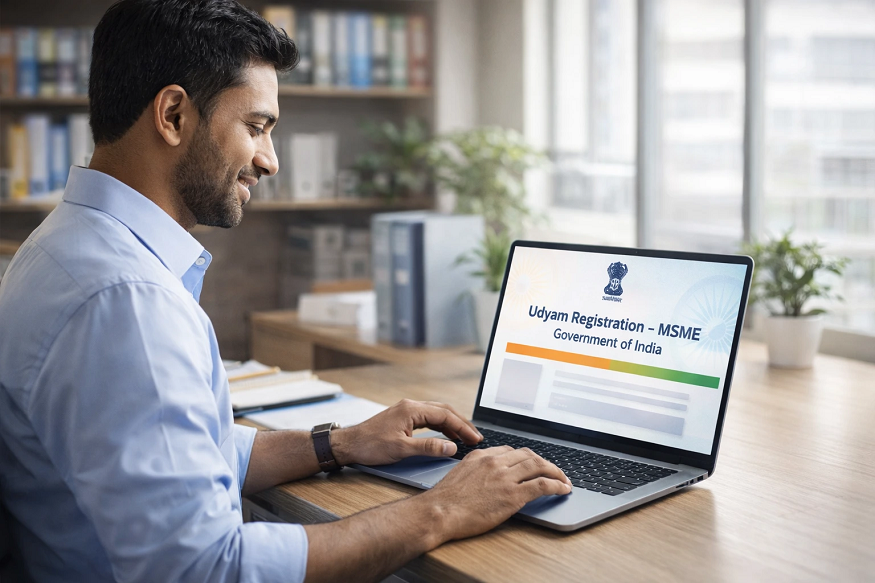
| Business proof | Udyam registration, GST registration or other applicable registration |
| Address | Business address or premises-related documents |
| Financial records | Bank statements and tax records, where available |
| Business plan | Project report, cost estimates and financial projections, where required |
A year-1 business may not have several years of ITRs or financial statements. In such cases, the lender may consider the available records along with the business proposal and promoter profile, depending on the product.
Read More: The Importance of Company Incorporation Services in Singapore
How New Businesses Can Improve Their Loan Application
A limited business history does not mean an application cannot be prepared strongly. Consider these steps:
- Start with a realistic loan amount
- Prepare a clear project report
- Maintain proper banking records
- Keep registrations and tax records updated
- Review your personal credit history
Can a Year-1 Business Get an MSME Loan?
Yes, a new business can potentially obtain formal financing, but approval is not automatic. Business loan eligibility may depend on factors such as the lender’s requirements, the business model, promoter’s credit profile, projected cash flows, funding requirement, and repayment capacity. Conventional lenders may have stricter requirements when a business has limited operating history, while schemes such as MUDRA, PMEGP, and Stand-Up India can provide relevant routes for eligible new enterprises. Prepare accurate records, build a realistic financial plan, and compare the complete cost and conditions before choosing a loan.